ServicesFlooring Installation
Flooring Installation in Easley
We install hardwood, engineered wood, luxury vinyl plank, tile and carpet, and we start by checking what is underneath. A flat, dry, solid subfloor is what keeps new floors quiet, tight at the seams and comfortable to walk on for years.
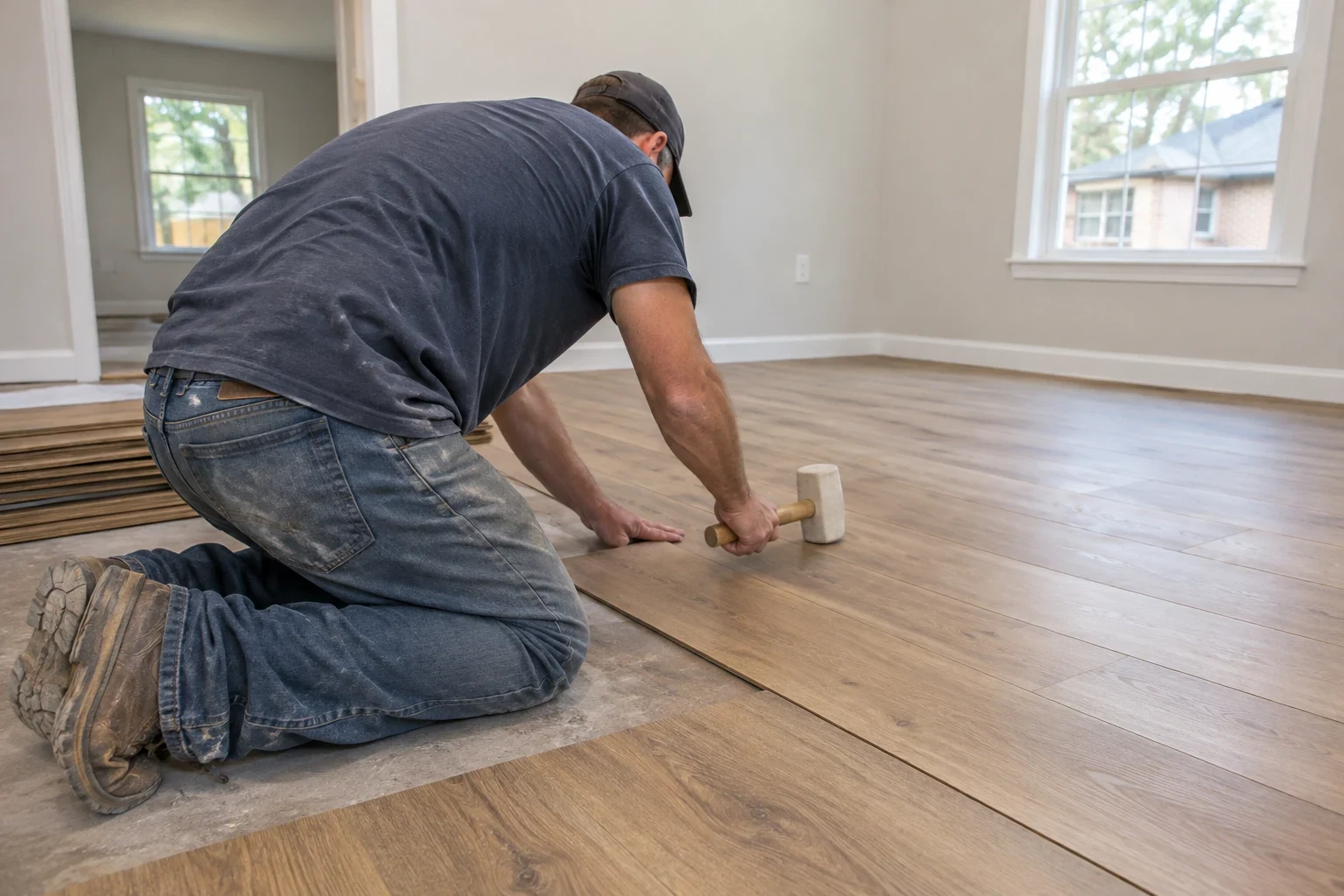
New Floors That Start With What You Can't See
Flooring is one of the few upgrades you feel every day, in your bare feet on a winter morning and in how a room sounds when you walk across it. We handle flooring installation in new custom homes we build and in houses families already live in.
Most floor problems begin below the surface. Cupped boards, cracked grout and soft spots usually trace back to a subfloor that was out of flat, holding moisture or poorly fastened. So we look underneath before we recommend anything on top, and we tell you plainly what we find.
There is a comfort side, too. In homes built over a crawlspace, a cold floor often means sagging insulation or open gaps around pipes and ducts. With the old floor up, that is the easiest moment to fix it, and it can make the room noticeably easier to heat and cool.
What Our Flooring Work Includes
- 01
Subfloor check and repair
We run a straightedge across the floor, find the high and low spots, and re-screw loose sheathing that causes squeaks. Water-stained or delaminated panels get replaced, not covered.
- 02
Moisture readings
We take meter readings on wood subfloors and concrete slabs before anything goes down. Solid wood is left to acclimate in the house so it doesn't shrink or swell after it is nailed in place.
- 03
Hardwood and engineered wood
Nail-down, glue-down or floating, depending on the product and what sits underneath. We leave the right expansion gap at the walls and hide it under trim.
- 04
Luxury vinyl plank and laminate
A good fit for kitchens, laundry rooms and busy family spaces. We match the underlayment to the product and the room, which helps with sound and with how warm the floor feels.
- 05
Tile
We set tile over cement board or an uncoupling membrane and check that the floor is stiff enough first. A floor that flexes is the most common reason tile and grout crack.
- 06
Trim, transitions and cleanup
Baseboard, shoe molding, thresholds and stair nosings finish the job. We haul away the old flooring and leave the room ready to use.
Questions about Flooring Installation?
Call(864) 713-1848Signs It's Time for New Flooring
Spots that sink or flex
When part of the floor dips as you step on it, the cause is usually a weakened subfloor or a problem in the framing below. Knowing which one early keeps the repair smaller.
Squeaks in more and more places
Squeaking comes from subfloor sheathing that has pulled loose from the joists. New flooring laid over it will still squeak until that fastening is corrected.
Boards curling or pulling apart
Raised edges, or gaps that open in one season and close in the next, tell you moisture is moving through the wood. Humid summers make this a frequent problem over damp crawlspaces.
Tile and grout that keep cracking
Cracks that return along the same line usually mean the floor beneath has too much give. Swapping out single tiles won't fix that.
A room that stays cold underfoot
A floor that never warms up in winter often has gaps in the insulation or air leaking in from below. Replacing the flooring opens the perfect window to correct both.
How a Flooring Project Runs
- 1
Consultation and measuring
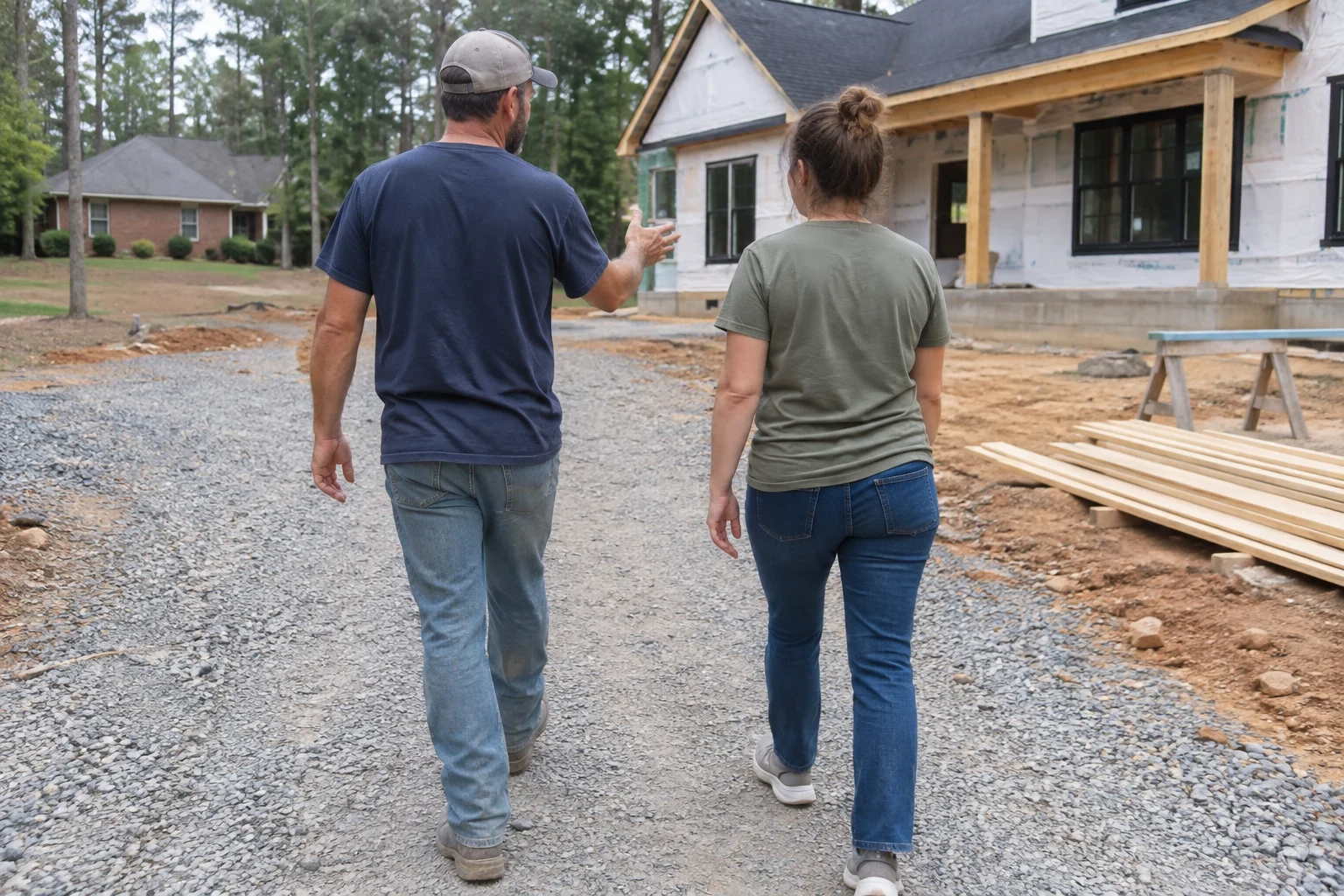
We walk the rooms with you, talk about how you use them, and measure. We also look at the subfloor wherever we can see it, including from the crawlspace.
- 2
A written, line-item estimate
You see materials, removal, subfloor repair and labor listed separately. If we can't know the subfloor condition until the old floor is up, we say so and explain how we'll handle it.
- 3
Prep and protection
We cover doorways and cabinets, control dust during tear-out, and fix the subfloor and any insulation issues before new material goes down.
- 4
Installation and walkthrough
We install, trim out and clean up. Then we walk the floor with you, room by room, so you can point out anything you want looked at again.
What Moves the Price of New Floors
We price each flooring job from your actual rooms, so the number comes after we've measured and checked the subfloor. A few things shift the total more than anything else.
- Room size and shape
- Big open spaces lay out fast. Closets, angled walls and several doorways call for more cuts, and every cut takes time.
- Your choice of material
- Solid hardwood, engineered wood, vinyl plank, tile and carpet vary a lot in both product cost and installation hours. Tile work and hardwood that is sanded and finished on site are the most labor-heavy.
- What the subfloor needs
- When the subfloor is already flat and dry, there is little to add. Leveling compound, new panels or insulation underneath raise the total, but that work is what keeps your new floor from failing early.
- Tear-out and disposal
- Old carpet lifts quickly. Tile or sheet vinyl that was glued down, or two and three layers left from past remodels, take more hours to strip and haul away.
- Stairs and transitions
- Every stair tread is fitted on its own, and so is each spot where one flooring type meets another. Those details add labor.
Flooring Installation Questions
How long does a flooring installation take?
One room of vinyl plank is often finished in a day or two. Tile, larger areas, or hardwood that has to sit and acclimate add time. At the consultation we map out a realistic schedule, including any cure time before the floor can take foot traffic.
Can you install new flooring over my existing floor?
In some cases, yes. A floating floor can sit on top of flat, firmly bonded sheet vinyl or tile, but never on carpet or anything that moves. We also measure the added height at doors and cabinets, since a taller floor can cause trouble there. When removal is the smarter route, we tell you why.
Which flooring works best over a crawlspace?
Engineered wood and luxury vinyl plank cope with humidity changes better than solid hardwood does. Whichever you pick, a dry crawlspace with good insulation below the floor does the most for how long it lasts and how warm it feels.
Can we keep living at home while you work?
In most cases, yes. We move through the house one room at a time when possible and keep the dust closed off. A tiled room or freshly finished hardwood may need to stay empty for a short stretch, and we let you know in advance so you can plan.
Can flooring be part of a bigger project?
Yes. Plenty of our flooring work happens inside a home remodeling project or a new custom home build. We schedule it so the floors go down once the dusty, heavy work is done.
Let's Talk About Your Floors
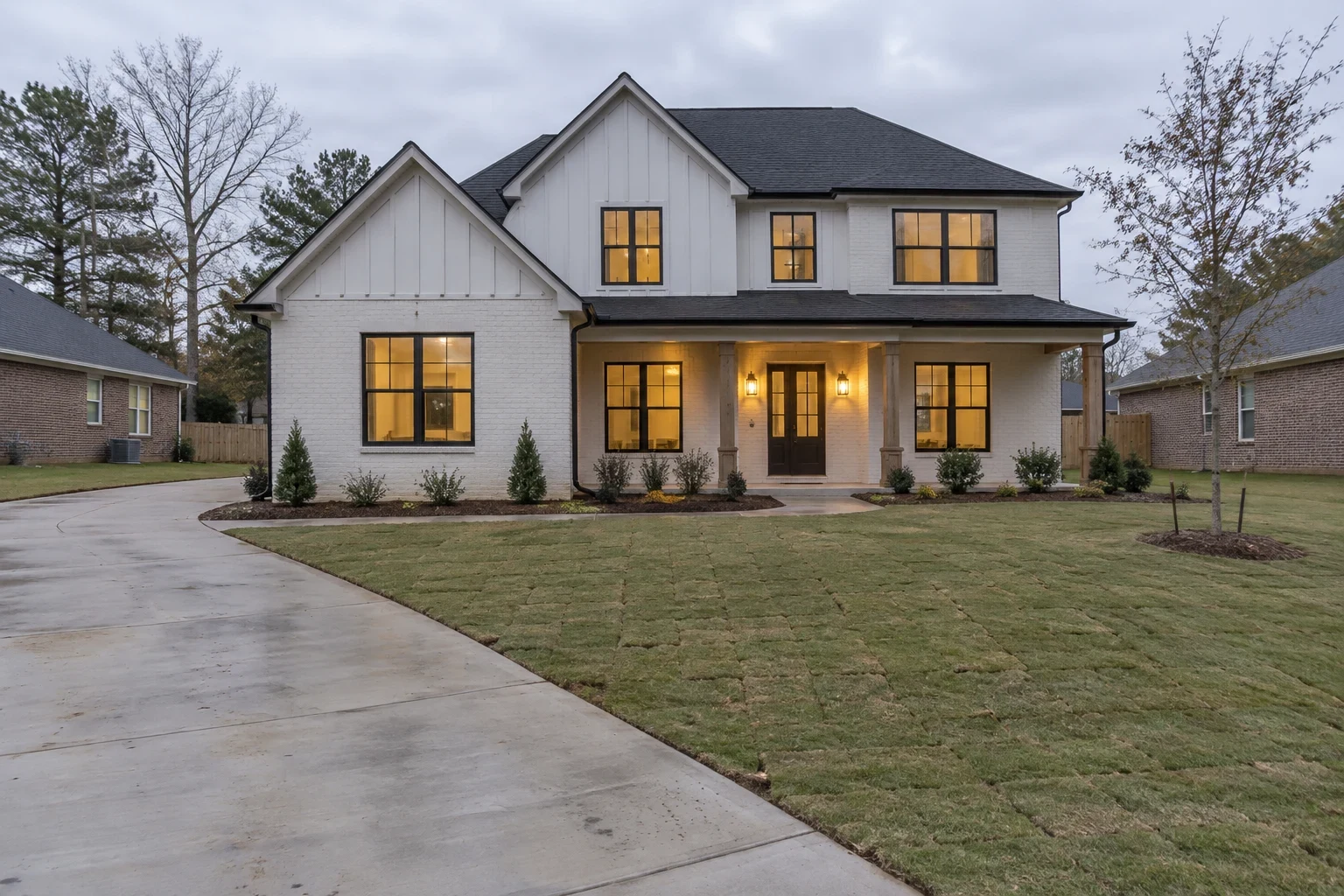
Let us know which rooms you have in mind and what you'd like to change about them. On a project consultation we'll look below the surface with you and lay out the choices that make sense for your home.