ServicesLand Clearing
Land Clearing in Easley
We clear your lot so the build can start on solid, clean ground. Trees, brush and stumps come out where the house, drive and septic will go, and the trees worth keeping stay put to shade your home for years.
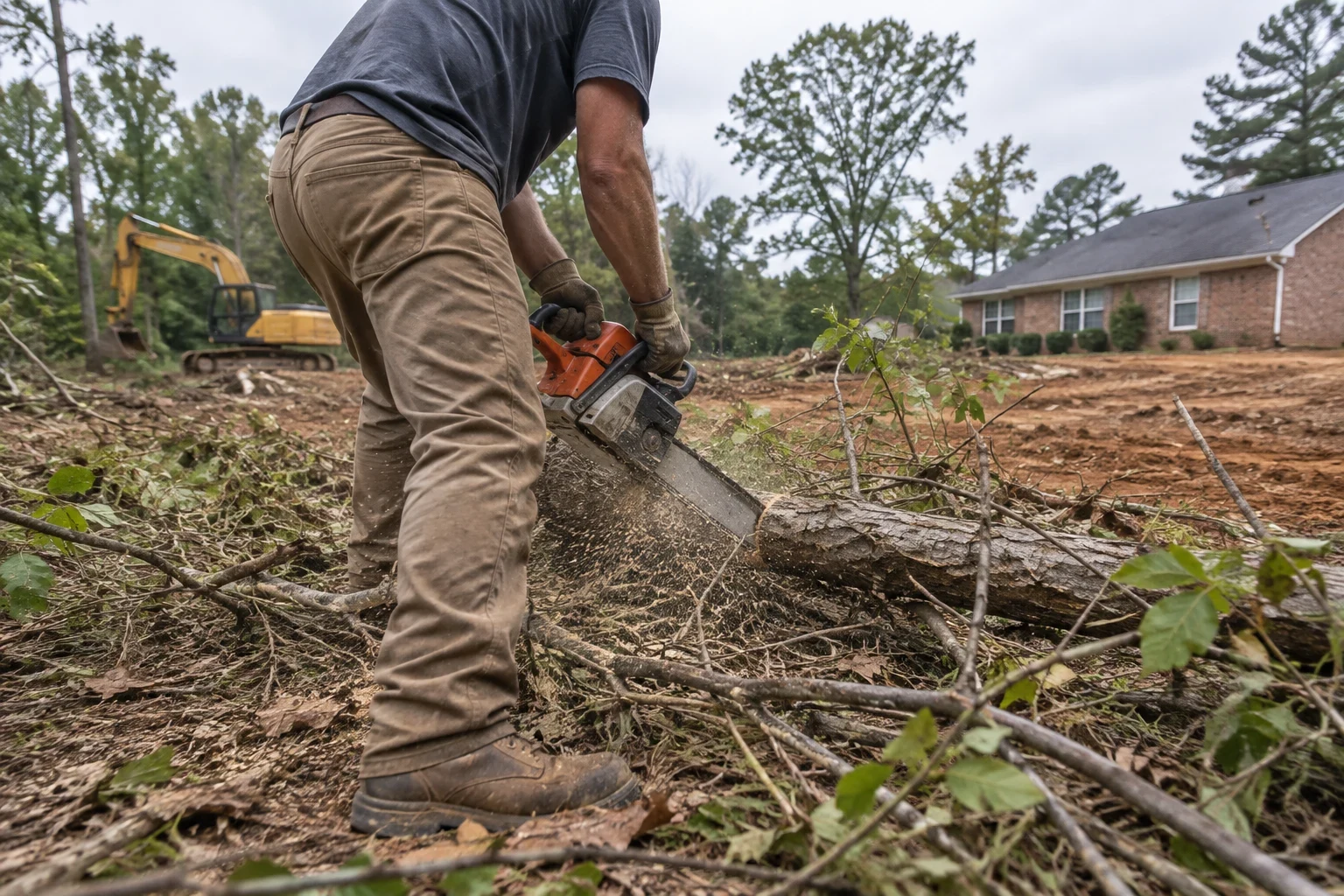
Clearing that starts with the house in mind
Before anything gets built, the land has to be opened up, and how that's done affects every step that follows. We take out trees, undergrowth, stumps and roots where your future home, driveway and work areas will sit, then hand over a site that's ready for grading and foundation work.
Bulldozing the whole lot flat isn't our approach. Before any cutting begins, we walk the property with you to settle where the house will go and which trees deserve to stay. A mature hardwood standing on the south or west side can shade the house from strong afternoon sun, so the rooms stay cooler and your summer cooling bills run lower after move-in. Trees that sit too close, where limbs could fall on the roof or roots could creep toward the foundation, are the ones we remove.
Own land around Easley, Pickens or Powdersville but haven't picked a floor plan yet? A consultation now shows you what your lot can fit and what opening it up will involve.
What a clearing job with us includes
Marking the clearing limits
Stakes go in for the house footprint, the driveway, the septic area and some working room around each one. Past those flags, nothing gets touched unless you ask for it.
Cutting trees and brush
Within the marked area, we fell trees and saplings and clear out vines and thick undergrowth. Want firewood? We can stack the good logs for you.
Pulling stumps and roots where you'll build
Beneath the house and driveway, we pull each stump out along with its roots instead of grinding it flush. Buried wood rots and leaves voids behind, and a slab or footing above a void can settle.
Protecting the trees that stay
We fence off the root zone around every tree you keep, so equipment never drives over its roots. Soil compacted near the trunk is one of the main reasons a kept tree starts dying a few years after construction.
Saving topsoil and handling debris
Good topsoil gets piled on the property for your landscaping later. Brush and debris are mulched, hauled off or dealt with in whatever way local rules permit for your lot.
Erosion control basics
With the vegetation gone, red clay can wash off in one hard summer storm. We put up silt fence where runoff could leave the property and disturb only as much ground as the work calls for.
Signs your lot needs clearing before you build
You can't see where the house would go
If the lot is thick woods or overgrown pasture, nobody can judge views, sun or slope. Opening it up lets you and your designer place the home with confidence.
Old stumps or buried debris
Lots that were logged years ago often hide stumps, slash piles or old fence lines. These need to come out before any foundation work.
No room for equipment or a driveway
Concrete trucks, lumber deliveries and a well rig all need a clear, firm path in. If you can't drive a pickup to the build spot, clearing comes first.
Dead or leaning trees near the build area
Trees that are dying, hollow or leaning toward the home site are a risk during construction and after. Removing them now is simpler than working around them later.
Kudzu, privet or heavy vines
Invasive growth smothers the trees you might want to keep and hides the ground underneath. Clearing it shows you what the lot really looks like.
How a clearing job runs
- 1
Walk the land together
We meet you on the lot, talk through your plans and mark the trees you love. We also look at slope, drainage paths and access for equipment.
- 2
Lay out the plan and the price
You get a written estimate that spells out what will be cleared, what stays, how stumps and debris are handled and what permits apply. No guessing about what is included.
- 3
Protect, then clear
Tree protection fencing and silt fence go up first. Then our crew cuts, pulls stumps and removes roots inside the marked limits, working from the access point back into the lot.
- 4
Leave it ready for the next step
We stockpile topsoil, clean up debris and walk the cleared site with you. From there the lot is ready for grading, and we can carry the project straight into foundation work and custom home building.
What sets the cost of clearing your lot
Every lot has its own combination of trees, slope and access, so we quote only after we've walked yours. Most of the price depends on two things: the amount that has to be removed and how easily equipment can get in and debris can get out. The estimate lists each part on a separate line, so you can see what each dollar covers.
- The size of the cleared area
- Clearing only the house site, driveway and septic field costs less than opening the whole property. The more trees you leave standing, the lower the total can be.
- The kind of growth on the lot
- Large, mature hardwoods take more cutting time and heavier equipment than young pine or scrub. Denser growth means more sawing and more truckloads hauled off.
- Pulling stumps and roots
- Removing every stump and its roots from beneath the build area takes more time than cutting flush with the ground. It's what keeps your foundation on solid soil, so we don't skip it.
- Grade and access
- Steep ground, wet low areas or a narrow way in slow the work and can call for different machines.
- Debris handling and permits
- Mulching on the property, hauling away and burning are priced differently, and your lot decides which are permitted. Disturbing a larger area can bring erosion-control permits, and we include that in the estimate up front.
Land clearing questions we hear often
Something not covered here? (864) 713-1848
Can I keep some trees close to the house?
Often, yes. We look at species, health and how close the tree sits to the foundation and roofline. A healthy hardwood far enough away to protect its roots can shade the house and help keep summer cooling costs down. If a tree is too close to survive construction, we will tell you honestly.
Do you grind stumps or pull them?
Under the house and drive, we pull stumps and remove the root mass. Ground stumps leave wood in the soil that rots and settles, which can crack a slab or shift a footing. Outside the build area, grinding may be fine and is usually less work.
Will clearing cause runoff onto my neighbor's land?
Bare clay sheds water quickly, so we plan for it. We install silt fence where runoff could leave the property and keep the cleared area only as large as the build needs. Grading afterward sets the final drainage away from the house.
Do I need clearing if I'm only adding onto my home?
Sometimes. An addition or new garage may need a few trees and stumps removed and the ground prepared. We can look at it during a project consultation and fold it into your home remodeling plans.
How long does clearing take?
It depends on the size of the area, how dense the trees are and the weather, since wet clay can stop heavy equipment for a day or two. We give you a realistic schedule in the estimate and keep you posted if rain changes it.
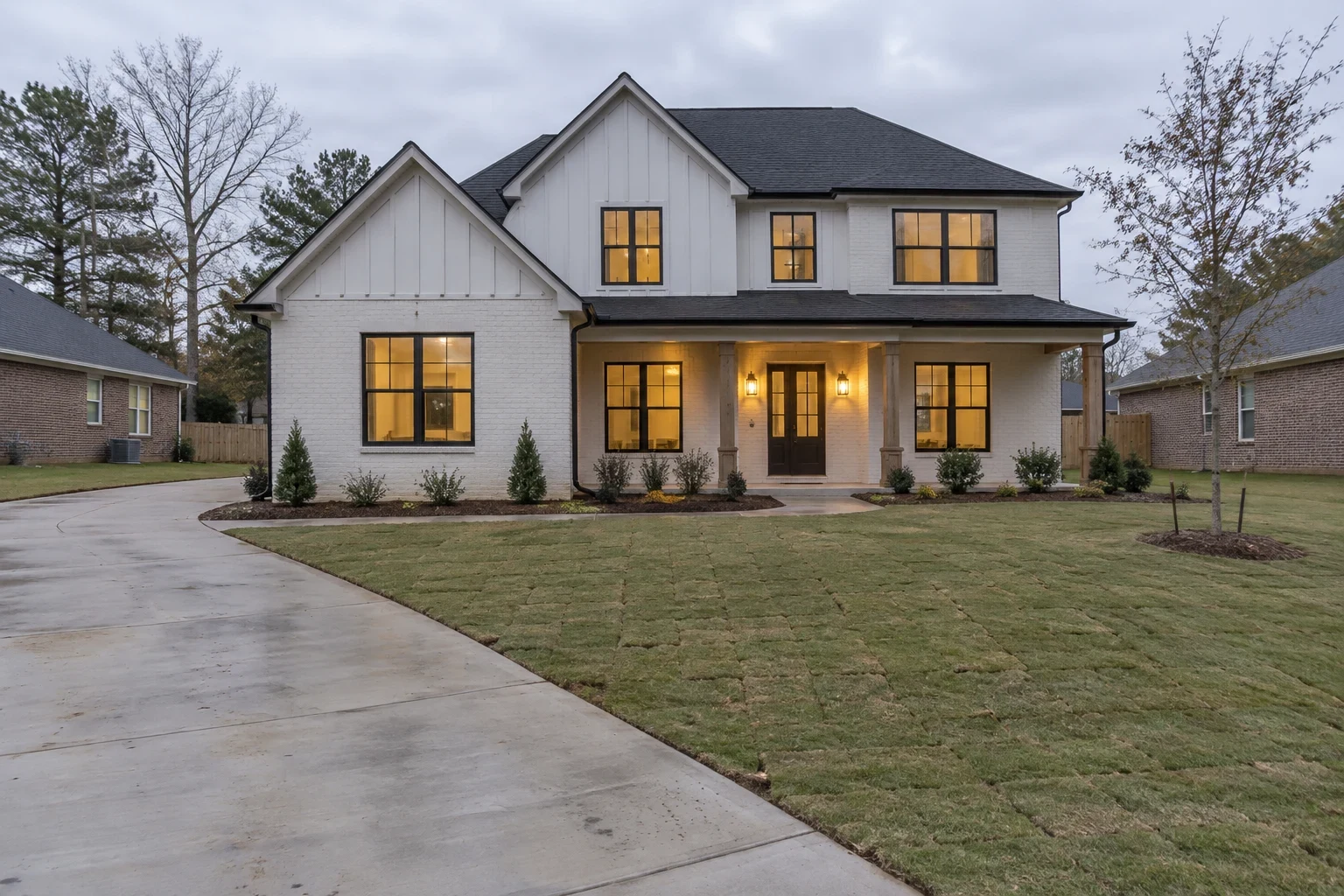
Let's walk your land together
Share what you have in mind for the property and the home you want on it. We'll meet you there, point out the trees worth saving and put together a straightforward plan to get the ground ready to build.